Professional Bespoke Enclosures Manufacturer Since 2007 - Hongfa Shunda
Language

Compare standard and custom electrical junction boxes. Learn cost analysis, lead times, materials, and which option saves money for your project.
Most engineers pick up a catalog, flip through standard enclosure specs, and call it a day. But here's the problem—that off-the-shelf box you ordered might cost less upfront, but it could bleed money through retrofitting, downtime, or complete replacement down the line.
The standard versus custom debate? It isn't about which option costs less on the purchase order. It's about which one delivers better long-term value for your specific application. A plastic junction box works perfectly for some installations. Others need a custom aluminum enclosure designed around exact specifications.
We've broken the comparison down into factors that actually matter for your project timeline and budget.
Here's what we cover:
● Key differences between standard and custom electrical enclosures
● When off-the-shelf enclosures make sense (and when they don't)
● Cost analysis: upfront pricing versus total ownership expenses
● Lead times and how they affect project schedules
● Design flexibility and modification limitations
● Material options across both categories
You'll walk away knowing exactly which enclosure type fits your requirements.
The difference between standard and custom electrical junction boxes boils down to three things: how they're made, design constraints, and how well they fit your application.
● The Manufacturing Process: Standard enclosures just get churned out on a production line in set sizes and configurations. They're made in bulk, which keeps costs down but locks you into fixed dimensions. Custom electrical junction boxes get made to order, built specifically to your exact specs.
● Design Flexibility: Off-the-shelf options tie you down to what's available. You have to work around their existing cutouts, mounting holes, and material choices. Custom solutions give you the freedom to specify:
○ Exactly what size you need, even if it's tiny
○ Precise locations for your components
○ What material do you want to use (a plastic enclosure, an aluminium one, or maybe a metal one)
○ Exactly what kind of finish do you need
○ Even things like doors, locks, and viewing windows
● Modification Requirements: Often, you need to make some adjustments to a standard box. You'll be drilling holes, cutting openings, or adding mounting brackets to get it to work. All that takes up a lot of time and can even compromise the enclosure's IP rating. Custom metal enclosures come ready to install with all the changes already made in the factory.
● Cost Structure: Sure, that plastic junction box from stock is cheap, but you have to factor in all the extra expenses. That's the modification labor, any shipping delays from having to return it, and the chance that it just won't perform as well as you need. Custom aluminum enclosures are more expensive per unit, but they get you out of doing all that retrofitting nonsense.
● Lead Time Variables: Standard enclosures ship out in a few days. Custom sheet metal enclosures take anywhere from 2-6 weeks, depending on just how complicated it is and how much the manufacturer's got on their plate. In the end, it's going to come down to how long you've got on your project timeline.
The decision always comes down to your specific application requirements, not which option sounds more appealing.
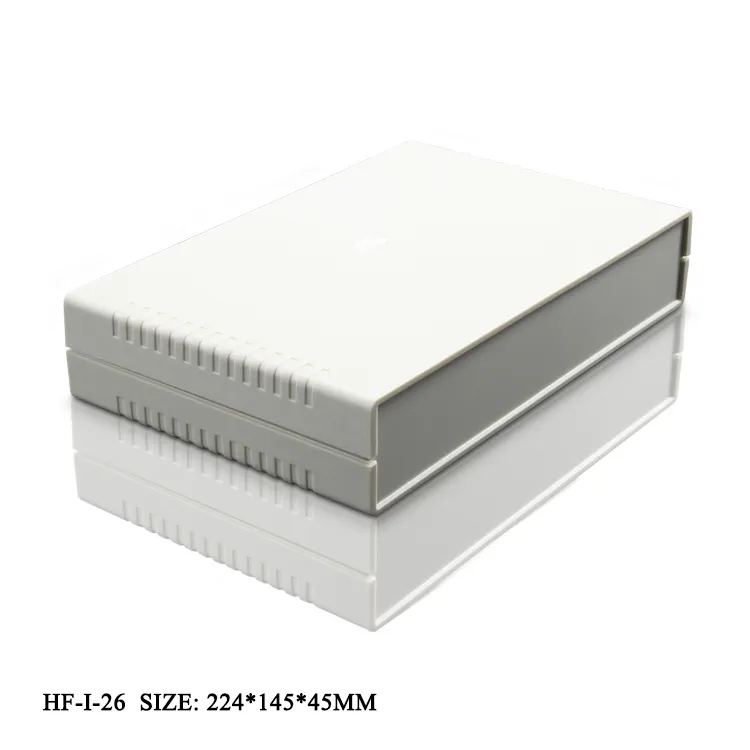
For pretty straightforward applications where customization is just gonna add cost without adding value, stock plastic enclosure boxes are the way to go.
● Simple Residential Installations: Most residential wiring tasks are pretty basic and don't need high-end housing. Standard plastic junction boxes work just fine and don't need any modification.
● Prototype Development: When you're just testing out circuit designs or have a proof-of-concept build, you want something that's fast-access and easy to use. Grab a standard aluminum enclosure box, slap your components in, and you can be testing in hours. Prototypes change a lot, so spending money on custom solutions during development is just a waste.
● Budget-Constrained Projects: If your project has really tight financial limits and standard dimensions are gonna work just fine, then off-the-shelf is your best bet. That stock ABS plastic enclosure costs 40-60% less than custom options for similar protection levels - a big difference.
● Low-Volume Applications: If you only need a few enclosures, say five for a small upgrade, custom tooling costs are just not justified. Standard options will give you the protection you need without all the min order hassle.
● Non-Critical Environments: For indoor applications with controlled temperatures, no vibration, and standard mounting surfaces, you don't need a fancy enclosure. Standard options meet NEMA ratings for these kinds of conditions.
● Quick Replacement Scenarios: When you've got a failed enclosure in an existing system, you need to replace it fast. Waiting weeks for a custom sheet metal enclosure means extended downtime. Standard options get you up and running again while you figure out a longer-term solution.
The question to ask is: Does your application have any unique requirements that standard options can't meet? If the answer is no, then standard enclosures get you the protection you need at a lower cost.
Purchase price is just part of the story. The total cost of ownership is what really reveals which option is saving you money in the long run.
That standard plastic junction box will run $15-$75, depending on the size and rating. Custom electrical junction boxes start at about $150-$300 for simple designs and go way up to $800+ for complex ones. That upfront difference looks pretty big until you start factoring in all the hidden costs.
Stock enclosures rarely fit perfectly, so you'll be spending:
● $50-$150 just for the labor to drill, cut, and mount the modifications
● $25-$75 on extra hardware and adapters
● $100-$200 if the modifications mess up the IP rating and you need to fix it
That $40 standard enclosure becomes a $215+ investment after all the modifications.
● Installation Time Costs: Field modifications add 2-4 hours per enclosure to your installation schedule. At $85 an hour for skilled labor, that's $170-$340 in extra costs. Custom metal enclosures come ready to install, which saves you a bunch on labor time - 60-75%.
● Replacement and Downtime: If your poorly fitted stock enclosures fail early, replacement costs will include the new enclosure, removal labor, reinstallation, and downtime expenses. A single replacement cycle on a critical system can cost $2,000-$5,000 when you account for production losses.
● Long-Term Value Calculation: A $300 custom aluminum enclosure that lasts 15 years without issues costs you $20 a year. A $50 standard option that needs replacement every five years costs you $10 a year in purchase price alone - before you even factor in all the modification and installation expenses.
Run the numbers for your specific application. Include labor rates, modification complexity, and expected lifespan. In the end, the lower purchase price often loses out to better total cost performance.
Procurement schedules directly affect critical path activities in electrical installations. The gap between standard and custom enclosure delivery can shift project completion dates by weeks.
● Standard Enclosure Availability: Stock plastic enclosures ship within 1-3 business days from distributors. You can often pick them up same-day from a local supplier. This speed works well for projects with compressed schedules or when you're replacing failed equipment.
● Custom Fabrication Timelines: Custom sheet metal enclosures require manufacturing time that varies by complexity and shop capacity. Simple modifications to standard designs take 2-3 weeks. Fully engineered custom aluminum enclosures need 4-6 weeks from order approval to delivery. Manufacturers usually break production into phases:* Engineering review and getting the thumbs up ( 3 - 5 working days )
○ Getting the tools and programming sorted ( 2 - 4 days )
○ Fabricating the parts and giving it a nice finish ( 5 - 15 days )
○ Quick quality check to make sure everything is up to scratch ( 1 - 2 days )
○ Waiting for shipping to arrive ( 2 - 7 days )
● Project Schedule Integration: Savvy project managers get the custom enclosures in the bag early on, at the same time as they're getting the site sorted and the infrastructure in place. You can pretty much do these things at the same time, rather than one after the other. Here's a rough idea of how this might play out for a typical industrial install:
○ Weeks 1-2: Get the enclosure specs sorted and place an order
○ Weeks 3-6: Get the site ready, run some conduit, and install the panels
○ Week 6-7: Get the custom enclosures delivered
○ Week 7-8: Stick the enclosures on and hook up the final connections
● Rush Options and Costs: Most custom metal enclosure manufacturers can bump up production speeds for a 25-50% price hit. Cut the delivery time to 7-10 days with rush orders, but be aware that shop capacity gets a lot tighter when there's a big demand during peak periods.
● Inventory Strategy: Some facilities stock standard plastic junction boxes for routine maintenance, while holding off on custom solutions for new installs. This half-and-half approach balances the need for something right now with the long-term performance you really want.
The lead time difference isn't as big a deal when you plan ahead. Consider custom enclosure procurement way back in the early project phases, rather than treating it as some last-minute procurement item.
Standard enclosures lock you into whatever they happen to offer. Custom options open up lots of possibilities, but then you've also got to deal with their own set of practical realities.
Off-the-shelf boxes come in fixed dimensions, have pre-drilled mounting holes, and yeah - the knockout locations are all set too. You have to adapt your equipment layout to fit the enclosure - it's that way round, not the other.
For example, a standard aluminium enclosure box might have mounting holes spaced at 4-inch intervals when your components call for 3.5-inch spacing. If you don't get that right, you're in for a world of trouble:
● You can end up with compromised structural integrity from oversized cutouts\
● IP ratings take a hit from improper sealing\
● You void the warranty from unauthorized mods\
● Or fail inspections from non-compliant alterations
Custom electrical junction boxes let you specify exactly what you need before fabrication even starts. You get to control dimensions down to the millimetre, locate cutouts where your components need them, and throw in features during the manufacturing process.
Some common customizations include:
● Non-standard dimensions for those tight installations\
● Pre-installed cable glands in specific positions\
● Integrated DIN rails, mounting plates, or standoffs\
● Custom hinge locations and door configurations\
● Specialty finishes for those corrosive environments\
● Viewing windows or transparent sections
Custom doesn't mean you can do whatever you like. Metal enclosure manufacturers work within material and fabrication limits. Walls that are too thin compromise strength, and complex geometries will send costs through the roof. You need to balance your requirements against what's actually possible.
A standard plastic enclosure box is going to need mods done in the field under variable conditions. Custom solutions, on the other hand, complete all modifications in a controlled manufacturing environment with proper tools and quality checks.
The gap between standard and custom widens as application complexity goes up. Simple installations can get by with standard limitations. But specialized equipment installs are where custom precision really pays off.
Both standard and custom enclosures come in various materials, and each is suited to a different set of conditions and performance requirements.
1. Plastic Options
Plastic enclosures rule the roost in indoor and light-duty apps. ABS plastic enclosures are good for impact resistance and can handle temperatures up to 176°F. Polycarbonate versions can handle even higher temps (240°F) and provide better UV resistance for outdoor use.
Standard plastic junction boxes come in:\
● ABS (acrylonitrile butadiene styrene)\
● Polycarbonate (PC)\
● Polyester (fibreglass-reinforced)\
● PVC (polyvinyl chloride)
Custom plastic enclosure boxes use the same materials but let you vary the thickness, add custom colorants, and even special formulations for chemical resistance.
Aluminium enclosures balance light weight with excellent corrosion resistance. Standard aluminium boxes use 5052 or 6061 alloys in predetermined thicknesses. Custom aluminium enclosures let you pick:
● Alloy (5052, 6061, or 6063)\
● Wall thickness (from 0.063" to 0.25")\
● Surface treatments (anodizing, powder coating, chromate conversion)\
● Heat dissipation features like fins or extended surfaces
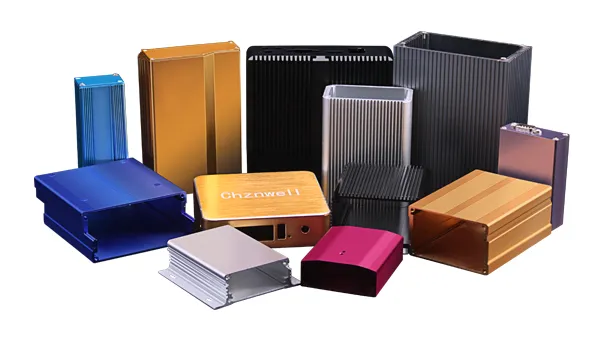
Steel sheet metal enclosures provide maximum strength for demanding applications. Standard options use cold-rolled steel with powder-coated finishes. Custom sheet metal enclosures give you:
● Stainless steel (304, 316) for corrosive environments\
● Galvanized steel for outdoor installations\
● Varying gauge thickness (14 ga to 20 ga)\
● Specialized coatings beyond standard powder coating
Plastic is usually the way to go for non-metallic environments and installations where weight is a concern. Aluminium suits outdoor apps and offers natural EMI shielding. Steel handles high-security needs and extreme physical stress.
Temperature ranges, chemical exposure, and physical impact requirements drive material selection a lot more than cost differences. A custom metal enclosure in the right material is going to outperform a cheaper standard option in the wrong material.
You now know exactly which factors matter when choosing between standard and custom electrical junction boxes. The real takeaway is that it's all about matching enclosure type to your specific application requirements - not declaring a universal winner.
Key takeaways to remember:
● Standard enclosures work well for simple installations, prototypes and quick replacements\
● Custom solutions deliver better value for complex applications - even if they cost more upfront\
● Total ownership costs often favour custom enclosures over their lifespan\
● Lead times require planning, but shouldn't derail projects with proper scheduling\
● Material selection matters way more than standard versus custom categorisation.
For projects needing custom electrical junction boxes, the difference between a "good enough" solution and one that really knocks it out of the park comes down to working with a sheet metal enclosure manufacturer that's got some serious experience under its belt. Shenzhen Hongfa Shunda Mould Co., Ltd is one of those top-notch companies that can knock out high-quality aluminium, sheet metal, and plastic enclosures - all without breaking the bank. Our team will take care of the whole thing, from a simple custom aluminium enclosure all the way up to super-complicated designs that involve several different materials.
The right enclosure is about more than just looking pretty - it's a key part in keeping your gear safe, making installation a breeze, and helping keep maintenance costs down over the long haul. So pick the enclosure that's right for your job, not the one that sounds fancy in a brochure.
